In most families, one sibling does all the caregiving. Not because anyone decided it, but because the role found the person least likely to say no. For the eldest son or daughter who became the default, this post names what that has actually cost, and what changes when you stop managing it alone.
When one sibling does all the caregiving, it rarely starts with a decision.
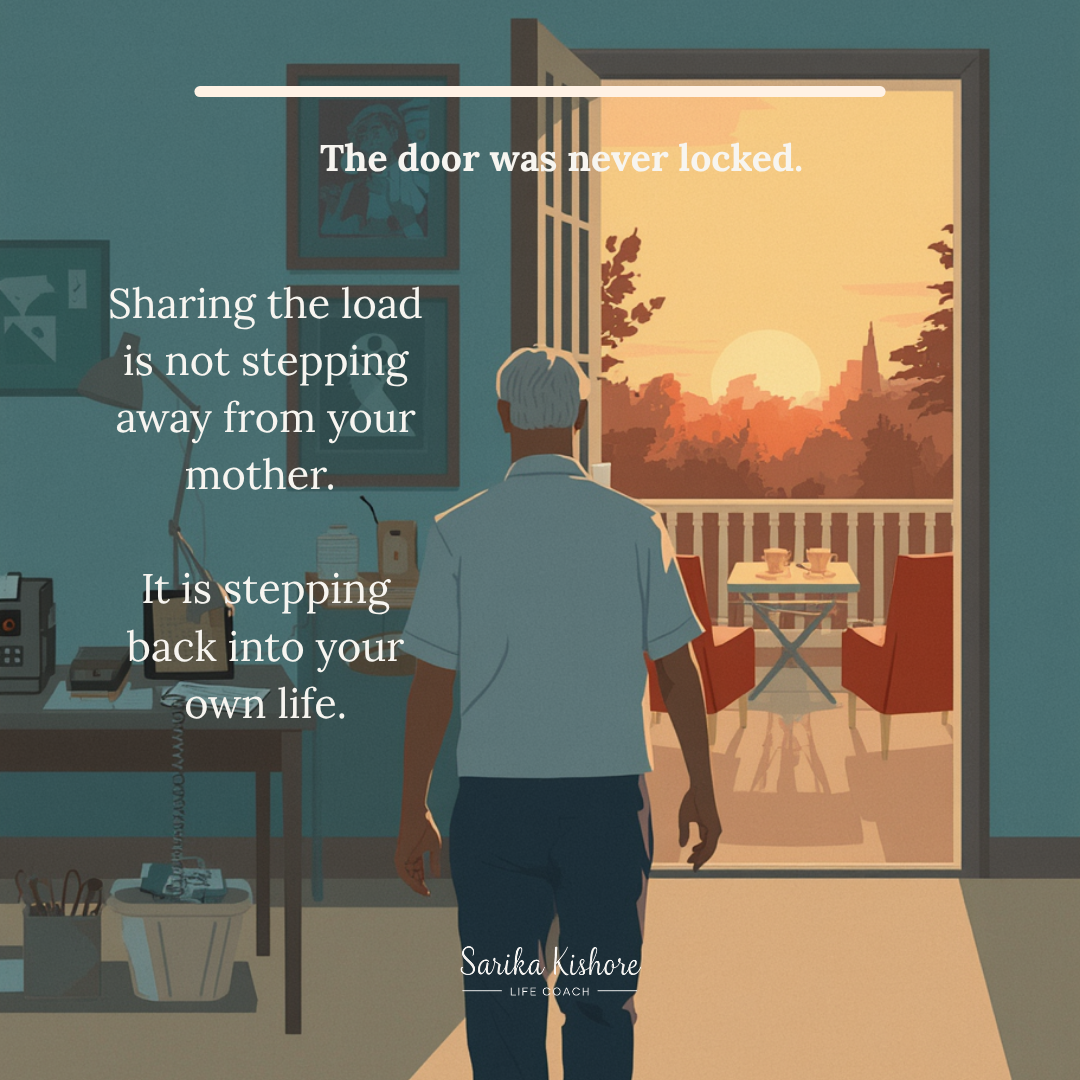
Amit has been managing his mother’s care for more than fifteen years. He is not visiting. He is not helping. He is managing. The caregivers, the medications, the wound that needs daily dressing, the money she will not spend the way she should. He is 61 years old, still working full-time, because the company health insurance is the only thing keeping him functional enough to keep going.
He lives in North America. She lives in India.
He does yoga before the calls now. Not for wellness. To manage the anger before it manages him.
His wife has learned to read the silence after the call. His kids have learned not to ask how it went.
There is always one person. In most families, when one sibling does all the caregiving, it is the eldest son or daughter — the one who picked up the first call, who figured out the medication schedule, who sat in the first hospital waiting room alone. After that, the assumption formed. Nobody said: this is yours now. But it became true.
The eldest child default caregiver ran everything in between.
Research confirms what most families will not say out loud. A survey by BURD Home Health found that 38% of men believe birth order should determine who takes on caregiving responsibilities. Only 21% of women agreed. And once the eldest steps into the role, almost no one questions whether they should still be the one holding it fifteen years later.
The role does not announce itself. It accumulates.
When one sibling does all the caregiving, it rarely looks dramatic from the outside.
From the outside: a responsible son who calls every day, coordinates everything, handles it.
From the inside: a man who has not fully exhaled in fifteen years. Who rehearses the call before it happens. Who holds the worst-case scenario somewhere in his chest, even on the days when the news is neutral.
A 2023 longitudinal study published in The Lancet Public Health tracked more than 17,000 people and found that psychological distress increases significantly when a person transitions into caregiving. That distress continues for years. The impact was particularly pronounced for those who had been caregiving the longest.
Amit has been at this for fifteen years. The body keeps score even when the person does not.
His BP is up. His cholesterol is up. He is doing everything he is supposed to do. None of it is bringing the numbers down. That is not a failure of self-care. That is what sustained, unshared load does to a human body over time.
When did you last spend a full day without thinking about what is happening there?
Here is the part that nobody names directly in these families.
The eldest child default caregiver is not just managing logistics. They are carrying the weight of constant knowing. What needs to happen next. What could go wrong. What will fall apart if they stop paying attention for even a day.
The extended family sees the coordination. They do not see the vigilance.
When one sibling does all the caregiving across a distance and a time zone, the cost does not stay inside the caregiving relationship. It spreads. It reaches the people closest to him who have the least power to name it. His family at home has adapted around a version of him that is always partly elsewhere.
That does not make it sustainable.
If you ask Amit why he keeps going, he will say he does not have a choice.
When you sit with it honestly, what it actually means is this: every available choice carries a cost that feels unsurvivable. Letting things fall apart. Being the one who stopped.
What is your sense of responsibility actually costing you?
In your body. In your marriage. In the version of yourself your family at home has been quietly adjusting to.
Most people in this position do not come to coaching to talk about caregiving. They come because something closer to home has started to crack.
And somewhere in the first conversation, a pattern surfaces. What is running underneath is a sense of responsibility so embedded it has stopped feeling like a choice and started feeling like identity. This is what I see consistently when one sibling does all the caregiving for years without acknowledgment or support.
Does that seem accurate to you?
That question, and whatever you answer, is where the work begins.
What is this sense of responsibility actually costing you? The list, when you write it out, is almost always longer than you expected. The health. The marriage. The children who stopped asking. The version of yourself you can no longer locate after the call.
Once you can see the full cost clearly, something shifts. The situation stays the same. Your relationship to it changes.
You start to see where you have been carrying responsibility that was never actually yours to carry alone. Where you have been using your capability as proof that you should keep going.
Being capable is not consent to be used up.
The point is not to change who you are. It is to give the part of you that already knows something is wrong a way to act on that knowledge, consistently.
If you are the eldest son or daughter in your family, the one who became responsible before anyone voted on it, and some part of you recognises the cost being described here, I would like to have a direct conversation.
A 30-minute conversation about what has been happening, and whether this work is the right fit for where you are.
Private. Grounded. No pressure. No performance.
Frequently Asked Questions
Why does one sibling always end up doing all the work?
Is it normal for caregiving to affect your physical health even when you are doing everything right?
What is the difference between a responsible caregiver and the eldest child default caregiver?
I have been doing this for years. How do I change anything without everything falling apart?
Is this coaching or therapy?
Key Takeaways
The eldest son or daughter rarely chose the caregiving role. Research shows 38% of men believe the eldest should carry primary caregiving responsibility. The expectation is in place long before any crisis arrives.
Sustained load affects physical health even when the person is doing everything right. A 2023 study in The Lancet Public Health found that psychological distress from caregiving continues for years.
Not having a choice is not the same as having no choices. It means every visible option carries a cost that feels unsurvivable. The more useful question is: what is your sense of responsibility actually costing you?
When one sibling does all the caregiving, the cost does not stay in the caregiving relationship. It reaches the partner who reads the silence. The children who stopped asking.
Being capable is not consent to be used up. Competence is how the role gets assigned. It is not a reason to carry unlimited load without support.